
Knapton 1747 Engraving - Elizabeth Queen of Henry VII
Knapton 1747 Engraving - Elizabeth Queen of Henry VII
Impossible de charger la disponibilité du service de retrait
Partager
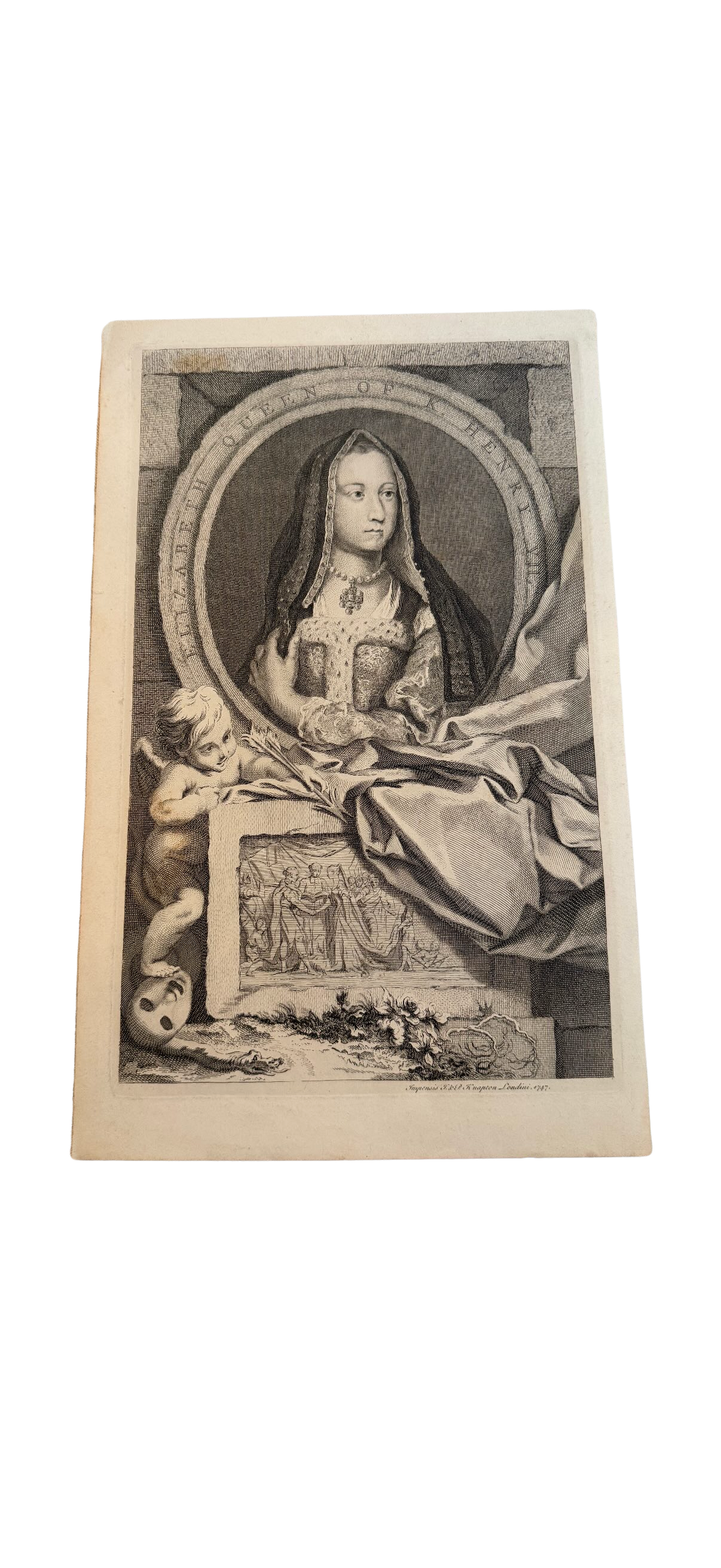
18th C English School Prints - Knapton Elizabeth Queen of Henry VII
Elizabeth of York, Queen of Henry VII
18th C (1747)
16.25" x 10"
Copperplate engraving
Elizabeth of York, who was the queen consort of Henry VII of England and the mother of Henry VIII. She was a key figure in the unification of the warring houses of York and Lancaster after the Wars of the Roses.
""Published at the expense of J. & P. Knapton, London, 1747.""
John and Paul Knapton were prominent 18th-century London booksellers and publishers. They are best known for publishing ""The Heads of Illustrious Persons of Great Britain"" in collaboration with the engraver George Vertue, featuring historical figures in portrait format.
This engraving is almost certainly part of that series or a similar contemporary collection celebrating British royalty and nobility.
The cherub and theatrical mask may allude to themes of legacy, drama, or the transitory nature of fame and power—common allegorical motifs in this era.
Though not directly signed on this visible portion, engravings like this from the Knapton brothers' catalog were often executed by George Vertue, the most prominent British engraver of his time.
18th C English School Prints - Knapton Elizabeth Queen of Henry VII
Elizabeth of York, Queen of Henry VII
18th C (1747)
16.25" x 10"
Copperplate engraving
Elizabeth of York, who was the queen consort of Henry VII of England and the mother of Henry VIII. She was a key figure in the unification of the warring houses of York and Lancaster after the Wars of the Roses.
""Published at the expense of J. & P. Knapton, London, 1747.""
John and Paul Knapton were prominent 18th-century London booksellers and publishers. They are best known for publishing ""The Heads of Illustrious Persons of Great Britain"" in collaboration with the engraver George Vertue, featuring historical figures in portrait format.
This engraving is almost certainly part of that series or a similar contemporary collection celebrating British royalty and nobility.
The cherub and theatrical mask may allude to themes of legacy, drama, or the transitory nature of fame and power—common allegorical motifs in this era.
Though not directly signed on this visible portion, engravings like this from the Knapton brothers' catalog were often executed by George Vertue, the most prominent British engraver of his time.