

Large Antique French Rococo Revival Figural Gilt-Metal Adjustable Picture Easel
Large Antique French Rococo Revival Figural Gilt-Metal Adjustable Picture Easel
Impossible de charger la disponibilité du service de retrait
Partager
Additional Description
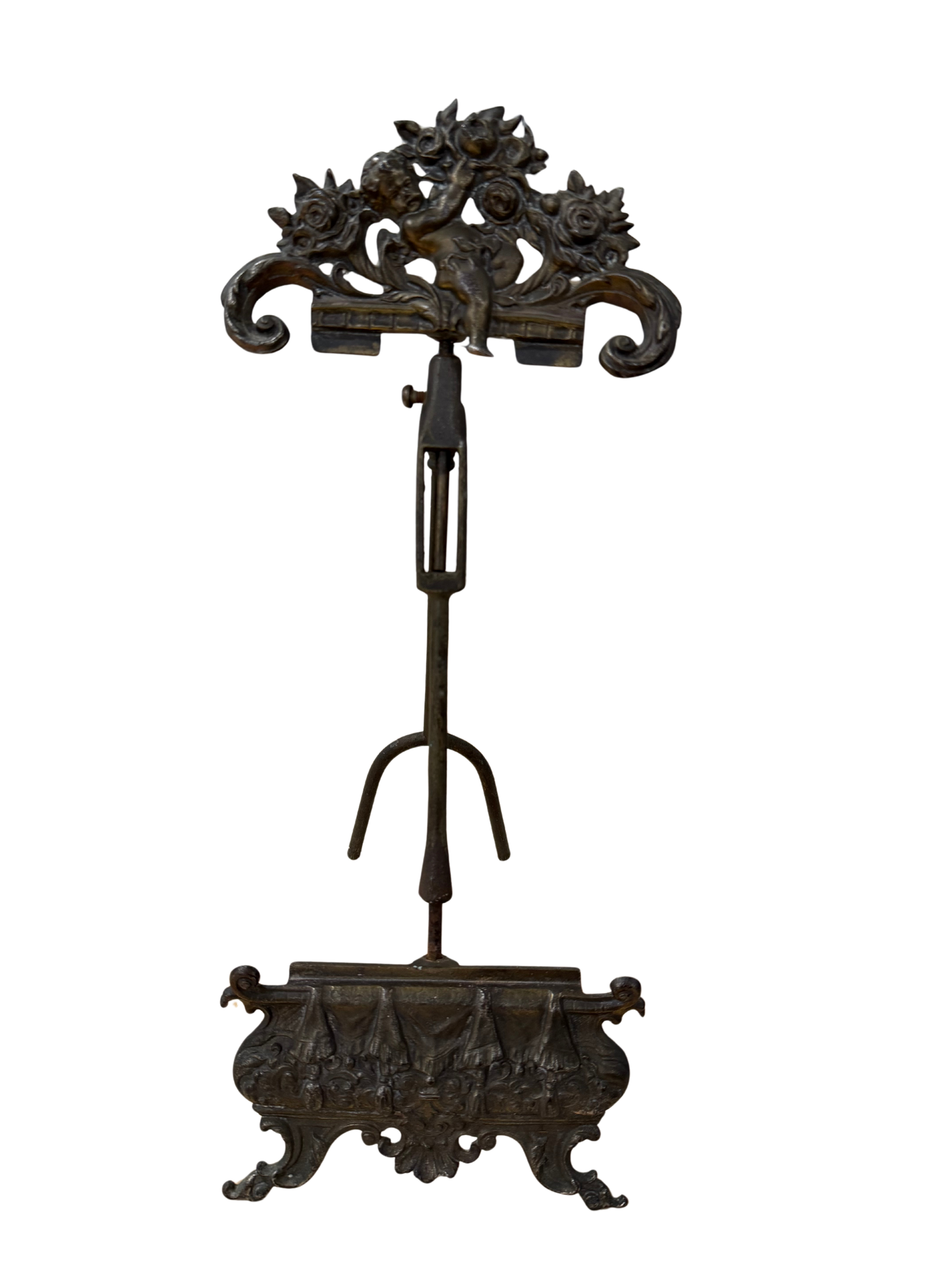
A dramatic and highly decorative antique adjustable picture easel in the French Rococo Revival taste, richly ornamented with scrolling acanthus, floral garlands, foliate flourishes, classical female figures, and a central urn overflowing with flowers.
The substantial pierced cast-metal upper and lower supports are mounted to a sturdy iron framework with an adjustable central standard, allowing the easel to accommodate framed paintings, portraits, mirrors, or other decorative works of varying heights. The rear iron support opens to create a freestanding tripod-style display.
The upper crest is particularly elaborate, centered by a flowering urn and flanked by opposing female figures emerging from scrolling foliate ornament. The lower support continues the exuberant decoration with additional figures, flowers, and rocaille-inspired scrollwork.
The reverse reveals the utilitarian construction beneath the ornate façade, including an iron standard, adjustable sliding collar, large slotted fasteners, rear support, and separately mounted cast decorative elements. The contrast between the highly finished front and comparatively rough cast backs is consistent with period decorative metalwork intended primarily to be viewed from the front.
An exceptionally theatrical display piece suited to a salon-style interior, gallery wall vignette, or as a statement support for an antique painting.
## Era
**Late 19th to early 20th century, approximately c. 1880–1910.**
## History
Decorative standing and tabletop easels became fashionable accessories in European interiors during the latter half of the 19th century, particularly as historic revival styles drew heavily from the decorative vocabulary of the French ancien régime.
This example reflects the renewed popularity of Louis XV and Rococo ornament during the late Victorian and Belle Époque periods. Elaborate gilt-metal furnishings of this type were designed not as artists' working easels, but as luxurious presentation pieces for paintings, portraits, mirrors, and photographs within richly furnished domestic interiors.
The combination of cast decorative metalwork with a practical iron adjustment mechanism allowed the owner to display works of different dimensions while maintaining the appearance of an exceptionally ornate piece of furniture.
## Provenance
**Continental European, likely French.**
Specific maker and provenance presently unknown.
## Materials
Cast gilt or bronzed metal, likely brass or bronze alloy; iron structural framework and adjustment mechanism.
## Dimensions
**Dimensions forthcoming.**
## Condition / Disclaimers
Antique condition with wear consistent with age and use. The metal retains an aged patinated surface with areas of oxidation, discoloration, rubbing, and losses to the original gilt or bronzed finish. The iron framework shows surface oxidation and expected age-related wear.
Cast elements exhibit the irregularities, roughness, and minor imperfections characteristic of period casting. Evidence of historic assembly, attachment, and adjustment is visible to the reverse.
Any small bends, losses, old repairs, looseness, or irregularities should be considered part of the object's antique character. Please review all photographs closely for condition and construction details.
Attribution to France and dating are based upon stylistic and construction characteristics; no maker's mark has presently been identified.
Additional Description
A dramatic and highly decorative antique adjustable picture easel in the French Rococo Revival taste, richly ornamented with scrolling acanthus, floral garlands, foliate flourishes, classical female figures, and a central urn overflowing with flowers.
The substantial pierced cast-metal upper and lower supports are mounted to a sturdy iron framework with an adjustable central standard, allowing the easel to accommodate framed paintings, portraits, mirrors, or other decorative works of varying heights. The rear iron support opens to create a freestanding tripod-style display.
The upper crest is particularly elaborate, centered by a flowering urn and flanked by opposing female figures emerging from scrolling foliate ornament. The lower support continues the exuberant decoration with additional figures, flowers, and rocaille-inspired scrollwork.
The reverse reveals the utilitarian construction beneath the ornate façade, including an iron standard, adjustable sliding collar, large slotted fasteners, rear support, and separately mounted cast decorative elements. The contrast between the highly finished front and comparatively rough cast backs is consistent with period decorative metalwork intended primarily to be viewed from the front.
An exceptionally theatrical display piece suited to a salon-style interior, gallery wall vignette, or as a statement support for an antique painting.
## Era
**Late 19th to early 20th century, approximately c. 1880–1910.**
## History
Decorative standing and tabletop easels became fashionable accessories in European interiors during the latter half of the 19th century, particularly as historic revival styles drew heavily from the decorative vocabulary of the French ancien régime.
This example reflects the renewed popularity of Louis XV and Rococo ornament during the late Victorian and Belle Époque periods. Elaborate gilt-metal furnishings of this type were designed not as artists' working easels, but as luxurious presentation pieces for paintings, portraits, mirrors, and photographs within richly furnished domestic interiors.
The combination of cast decorative metalwork with a practical iron adjustment mechanism allowed the owner to display works of different dimensions while maintaining the appearance of an exceptionally ornate piece of furniture.
## Provenance
**Continental European, likely French.**
Specific maker and provenance presently unknown.
## Materials
Cast gilt or bronzed metal, likely brass or bronze alloy; iron structural framework and adjustment mechanism.
## Dimensions
**Dimensions forthcoming.**
## Condition / Disclaimers
Antique condition with wear consistent with age and use. The metal retains an aged patinated surface with areas of oxidation, discoloration, rubbing, and losses to the original gilt or bronzed finish. The iron framework shows surface oxidation and expected age-related wear.
Cast elements exhibit the irregularities, roughness, and minor imperfections characteristic of period casting. Evidence of historic assembly, attachment, and adjustment is visible to the reverse.
Any small bends, losses, old repairs, looseness, or irregularities should be considered part of the object's antique character. Please review all photographs closely for condition and construction details.
Attribution to France and dating are based upon stylistic and construction characteristics; no maker's mark has presently been identified.