


Large Italian School Capriccio Painting with Figures Amidst Classical Ruins
Large Italian School Capriccio Painting with Figures Amidst Classical Ruins
Impossible de charger la disponibilité du service de retrait
Partager
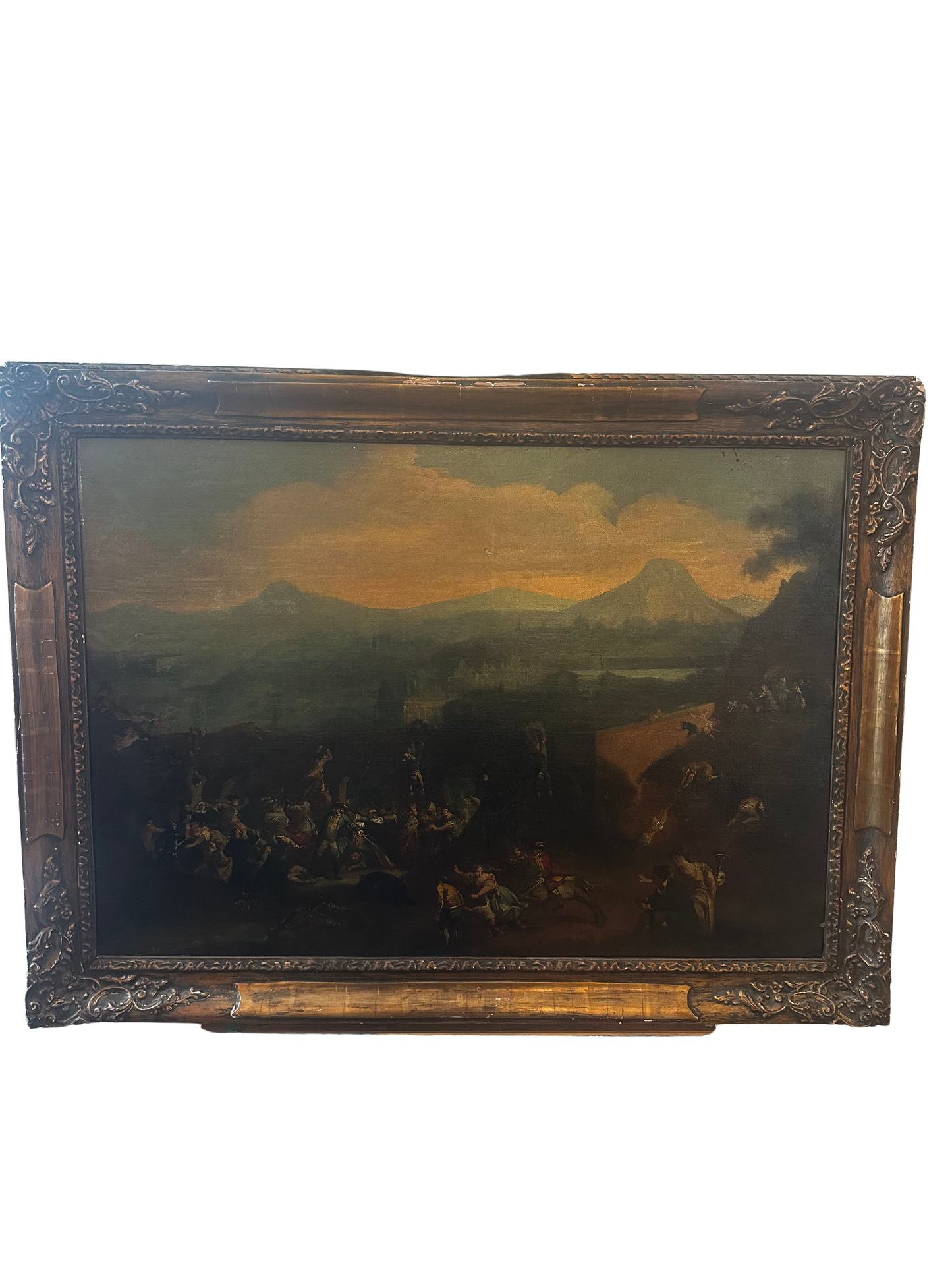
Item: Large Italian School Capriccio Painting with Figures Amidst Classical Ruins (36.5" x 27.5")
Additional Description:
A richly atmospheric Italian School oil on canvas depicting an animated capriccio scene populated with numerous figures amidst monumental classical ruins and an expansive mountainous landscape at dusk. The composition is filled with theatrical movement and romantic drama, featuring elegantly dressed figures gathered among crumbling architecture, bridges, and steep escarpments under a glowing amber sky.
The painting draws heavily from the tradition of 18th-century Italian capriccio painting — imaginative architectural fantasies combining classical ruins, pastoral scenery, and narrative figural groups. The work evokes the spirit of Venetian and Roman vedutisti such as Marco Ricci, Francesco Guardi, and Alessandro Magnasco, blending romantic ruin imagery with dramatic human activity.
Particularly striking is the glowing sunset palette contrasted against the deep shadowed foreground, creating a moody Grand Tour atmosphere. The mountainous terrain and bridge crossing lend the scene a distinctly theatrical and almost operatic quality. Numerous finely rendered miniature figures animate the composition, including cavaliers, peasants, attendants, and clustered social groups interacting throughout the ruins.
The painting exhibits extensive age craquelure consistent with age, along with visible historic paint loss and flaking concentrated primarily near the lower center-left area. The canvas has been professionally relined, likely in the late 19th or early 20th century, stabilizing the work structurally. The reverse bears an indistinct circular ink or stencil mark and retains an older stretcher configuration.
Housed in a substantial carved and giltwood frame with scrolling decorative motifs complementing the romantic Continental character of the painting.
Era:
Likely 18th century with later restoration and relining; possibly late 18th to early 19th century Italian School
History:
Capriccio paintings became highly sought after during the Grand Tour period, when wealthy European travelers collected romanticized visions of antiquity and Italy’s classical past. Rather than depicting exact locations, these works combined imagined ruins, dramatic landscapes, and narrative figures into poetic architectural fantasies intended to evoke nostalgia, grandeur, and the sublime.
This painting reflects that tradition beautifully, blending pastoral life, theatrical ruins, and atmospheric landscape into a highly decorative and evocative composition suited for aristocratic interiors and later grand European revival décor.
Provenance:
From the vaults of a Dallas designer collection.
Likely Italian in origin.
Materials:
Oil on canvas, relined canvas support, carved giltwood frame, wood stretcher
Dimensions:
Sight: approx. 21.25” H x 30.5” W
Overall: approx. 27.5” H x 36.5” W
Disclaimers:
Apparently unsigned. The painting has undergone historic relining and exhibits scattered paint flaking, craquelure, surface wear, restorations, and losses consistent with age. Areas of visible paint loss are present, especially near the lower center-left section. Frame exhibits wear, losses, and finish inconsistencies commensurate with age. Attribution is to Italian School in the manner of 18th-century capriccio painters and not to a specific identified artist.
Item: Large Italian School Capriccio Painting with Figures Amidst Classical Ruins (36.5" x 27.5")
Additional Description:
A richly atmospheric Italian School oil on canvas depicting an animated capriccio scene populated with numerous figures amidst monumental classical ruins and an expansive mountainous landscape at dusk. The composition is filled with theatrical movement and romantic drama, featuring elegantly dressed figures gathered among crumbling architecture, bridges, and steep escarpments under a glowing amber sky.
The painting draws heavily from the tradition of 18th-century Italian capriccio painting — imaginative architectural fantasies combining classical ruins, pastoral scenery, and narrative figural groups. The work evokes the spirit of Venetian and Roman vedutisti such as Marco Ricci, Francesco Guardi, and Alessandro Magnasco, blending romantic ruin imagery with dramatic human activity.
Particularly striking is the glowing sunset palette contrasted against the deep shadowed foreground, creating a moody Grand Tour atmosphere. The mountainous terrain and bridge crossing lend the scene a distinctly theatrical and almost operatic quality. Numerous finely rendered miniature figures animate the composition, including cavaliers, peasants, attendants, and clustered social groups interacting throughout the ruins.
The painting exhibits extensive age craquelure consistent with age, along with visible historic paint loss and flaking concentrated primarily near the lower center-left area. The canvas has been professionally relined, likely in the late 19th or early 20th century, stabilizing the work structurally. The reverse bears an indistinct circular ink or stencil mark and retains an older stretcher configuration.
Housed in a substantial carved and giltwood frame with scrolling decorative motifs complementing the romantic Continental character of the painting.
Era:
Likely 18th century with later restoration and relining; possibly late 18th to early 19th century Italian School
History:
Capriccio paintings became highly sought after during the Grand Tour period, when wealthy European travelers collected romanticized visions of antiquity and Italy’s classical past. Rather than depicting exact locations, these works combined imagined ruins, dramatic landscapes, and narrative figures into poetic architectural fantasies intended to evoke nostalgia, grandeur, and the sublime.
This painting reflects that tradition beautifully, blending pastoral life, theatrical ruins, and atmospheric landscape into a highly decorative and evocative composition suited for aristocratic interiors and later grand European revival décor.
Provenance:
From the vaults of a Dallas designer collection.
Likely Italian in origin.
Materials:
Oil on canvas, relined canvas support, carved giltwood frame, wood stretcher
Dimensions:
Sight: approx. 21.25” H x 30.5” W
Overall: approx. 27.5” H x 36.5” W
Disclaimers:
Apparently unsigned. The painting has undergone historic relining and exhibits scattered paint flaking, craquelure, surface wear, restorations, and losses consistent with age. Areas of visible paint loss are present, especially near the lower center-left section. Frame exhibits wear, losses, and finish inconsistencies commensurate with age. Attribution is to Italian School in the manner of 18th-century capriccio painters and not to a specific identified artist.