


Pair of Antique Grand Tour Style Classical Figural Sculptures (Male & Female)
Pair of Antique Grand Tour Style Classical Figural Sculptures (Male & Female)
Impossible de charger la disponibilité du service de retrait
Partager


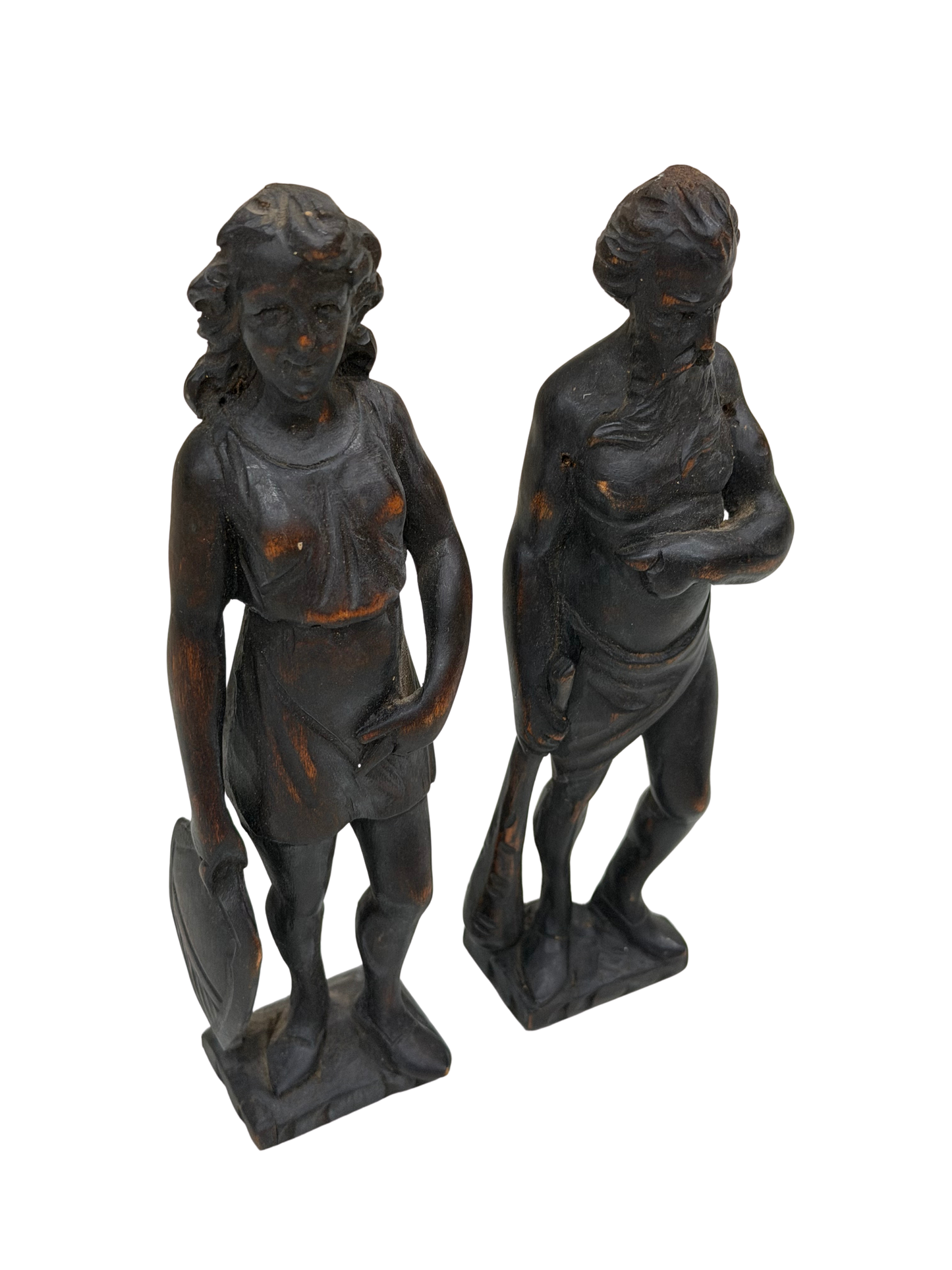
A decorative pair of antique classical figural sculptures depicting a bearded male figure holding a club—likely inspired by Hercules—and a draped female figure in a graceful contrapposto stance. Both figures draw heavily from Greco-Roman antiquity and reflect the enduring influence of classical forms in European decorative arts.
Produced in the Grand Tour revival tradition, these figures were likely intended as decorative elements within a larger object, such as a cabinet, clock case, or architectural mount. Evidence of their original function remains visible through openings to the reverse and losses at the base.
Each figure retains a dark, aged surface with bronze-like tonality, showing areas of wear that reveal warmer undertones beneath, adding depth and character. While no longer part of their original structure, they now exist as sculptural fragments—well-suited for display as decorative objects that bring a sense of history and classical influence to an interior.
A decorative pair of antique classical figural sculptures depicting a bearded male figure holding a club—likely inspired by Hercules—and a draped female figure in a graceful contrapposto stance. Both figures draw heavily from Greco-Roman antiquity and reflect the enduring influence of classical forms in European decorative arts.
Produced in the Grand Tour revival tradition, these figures were likely intended as decorative elements within a larger object, such as a cabinet, clock case, or architectural mount. Evidence of their original function remains visible through openings to the reverse and losses at the base.
Each figure retains a dark, aged surface with bronze-like tonality, showing areas of wear that reveal warmer undertones beneath, adding depth and character. While no longer part of their original structure, they now exist as sculptural fragments—well-suited for display as decorative objects that bring a sense of history and classical influence to an interior.
8"h x 2.5"w x 1.5"d (each)
8"h x 2.5"w x 1.5"d (each)
Inspired by the tradition of the Grand Tour, during which European travelers collected classical antiquities and reproductions, decorative objects such as these were produced to evoke the forms and ideals of ancient Greece and Rome. Figures like Hercules and allegorical female forms were especially popular in both academic and decorative contexts.
Inspired by the tradition of the Grand Tour, during which European travelers collected classical antiquities and reproductions, decorative objects such as these were produced to evoke the forms and ideals of ancient Greece and Rome. Figures like Hercules and allegorical female forms were especially popular in both academic and decorative contexts.
Late 19th to Early 20th Century
Late 19th to Early 20th Century
Carved wood with ebonized staining
Carved wood with ebonized staining
European origin, likely Continental. Acquired in Round Top, TX.
European origin, likely Continental. Acquired in Round Top, TX.
Fair to good antique condition with visible wear consistent with prior use as mounted elements:
Losses to bases and reverse
Visible holes from previous mounting
Surface wear and patina variation
Structural imperfections consistent with age and removal from original context
Sold as decorative fragments.
Fair to good antique condition with visible wear consistent with prior use as mounted elements:
Losses to bases and reverse
Visible holes from previous mounting
Surface wear and patina variation
Structural imperfections consistent with age and removal from original context
Sold as decorative fragments.